
10 Yard vs. 20 Yard Trash Dumpster: Which Size Do You Need?
A 10-yard dumpster holds 10 cubic yards, or about 270 cubic feet, and fits small, focused jobs: a bathroom remodel, a garage cleanout, or flooring from a few rooms. Step up to a 20-yard if you’re clearing a whole house, gutting a kitchen, or can’t confidently call the job small. A conservative rule of thumb: if your pile looks like more than three pickup truck loads, consider sizing up. Depending on the truck and the debris, a 10-yard roll-off dumpster can hold three to five loads.
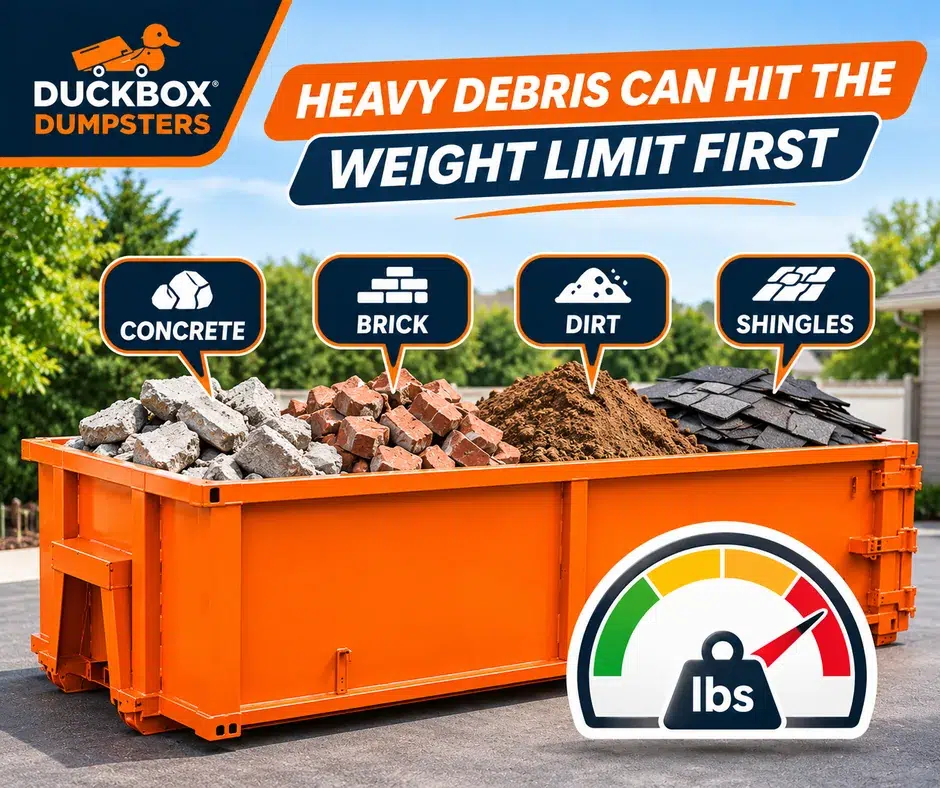
Dense debris is the exception. Concrete, brick, and shingles hit the weight limit before the container looks full, so a “small” pile of them can still be a big job for a dumpster.
Most people overthink dumpster sizing. You don’t need a spreadsheet, just an honest look at what you’re throwing away. We’re Duckbox Dumpsters, a roll-off dumpster rental company serving Austin, Cedar Park, Leander, and Round Rock. We offer 10, 20, 30, and 40 yard sizes, so you can match the container to the job instead of guessing.
Key takeaways
- Size by pickup loads: A 10-yard holds roughly five pickup loads. Anything past that points to a 20-yard.
- Know the fit: Bathrooms, garages, and a few rooms of flooring suit a 10-yard. Whole-house jobs don’t.
- Watch the weight: Concrete, brick, dirt, and shingles can max out the weight allowance first.
- Ask for all-in pricing: Confirm rental period, included tonnage, overage rate, and prohibited items before you book.
- Plan the spot: A flat, clear driveway makes delivery and pickup easy.
What does a 10-yard dumpster actually hold?
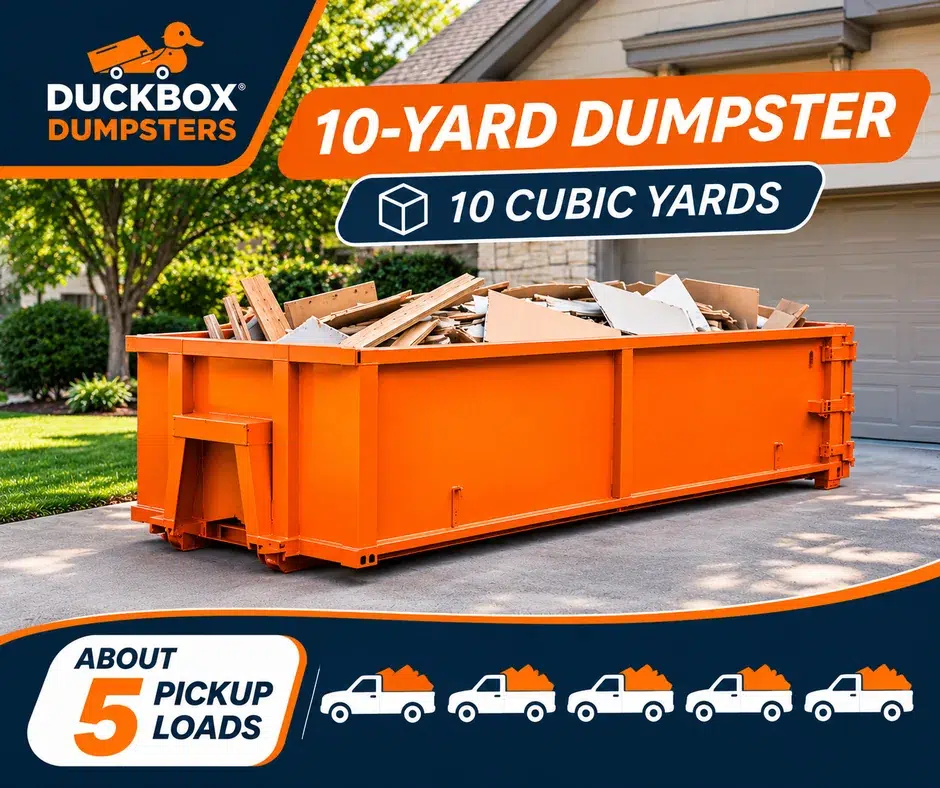
A 10-yard dumpster holds 10 cubic yards, or 270 cubic feet, which equals nearly about five pickup truck loads or 50 to 70 large trash bags. Think of it as the contents of a garage or one to two rooms, not an entire home.
10-yard dumpster dimensions in plain numbers
A typical 10-yard container measures roughly 14 feet long, 7 feet wide, and 4 feet high. Exact exterior dimensions vary by company and manufacturer. Some listed sizes run 12 to 15 feet long and 2 to 4.5 feet high. The interior capacity is the standard: 10 cubic yards.
Those lower walls matter. Depending on the container’s height, the debris, and who’s lifting, you may be able to toss material over the side by hand without a ramp or a ladder, which suits homeowners doing their own cleanup.
What that looks like in real life
Picture five loads in a full-size pickup bed, heaped up. The exact amount shifts with bed size, how high you stack, and what you’re hauling. Bulky, awkward items like furniture eat space faster than flat drywall scraps.
Why a smaller container is often the smarter pick
Bigger isn’t better if you won’t fill it, because you pay for space you don’t use. We offer 10, 20, 30, and 40 yard dumpsters so the container can match the job.
Which cleanout and remodeling projects fit a 10-yard dumpster?
A 10-yard dumpster fits small, focused cleanup and renovation jobs. If your project lives in one or two rooms, it probably fits. The list below covers what works well.
Jobs that suit this size
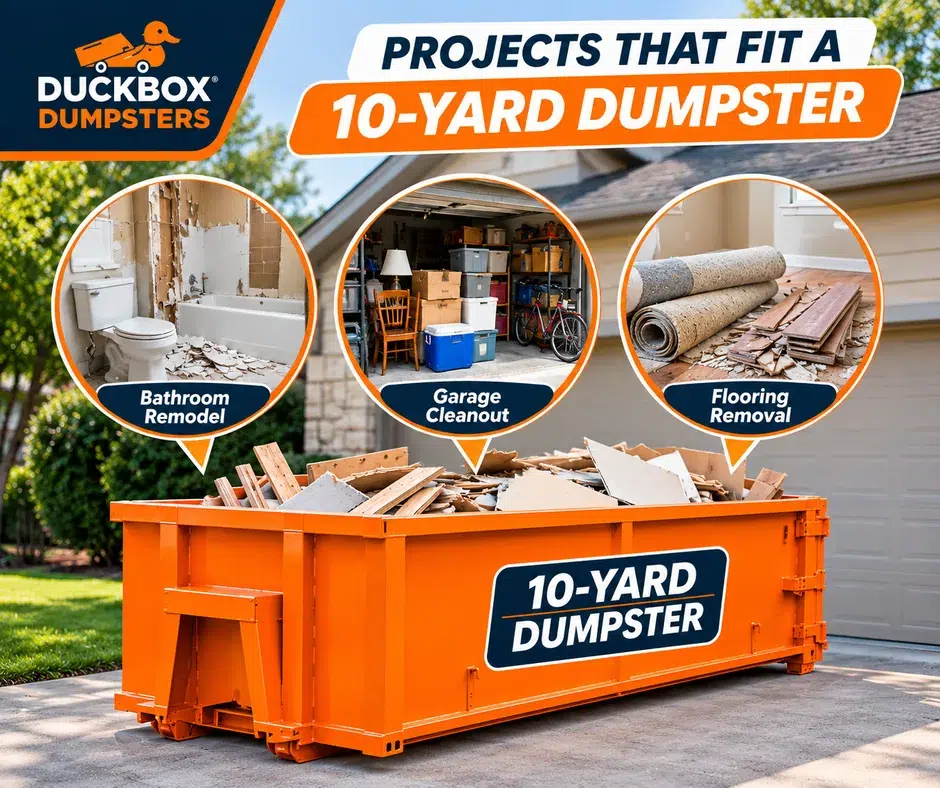
- Bathroom remodel: tile, drywall, vanity, toilet, tub or shower, and fixtures
- Partial kitchen update: old cabinets, countertops, and flooring
- Flooring removal from a few rooms: carpet, padding, laminate, hardwood, vinyl, or tile
- Garage, attic, or basement cleanout
- Small deck or shed teardown
- Small roof repair or partial tear-off
- Moderate yard cleanup: branches, shrubs, leaves, and fencing
- Downsizing or estate cleanouts covering one or two rooms
These are the kinds of weekend projects homeowners in Cedar Park, Leander, and Round Rock commonly take on. Landlords handling tenant turnovers and repairs also fit this size.
Jobs that are too big for it
A 10-yard is usually too small for whole-home renovations, full-house cleanouts, large tree removal, or extensive roofing and concrete work. If you’re debating sizes for one of these, the answer is already the bigger one.
The heavy debris catch
Concrete, brick, tile, dirt, and shingles are dense. A container can hit its weight limit long before it’s full. When you request a quote, describe the debris so you get the right size and the right answer on weight.
How does a 10-yard dumpster compare with a 20-yard dumpster?
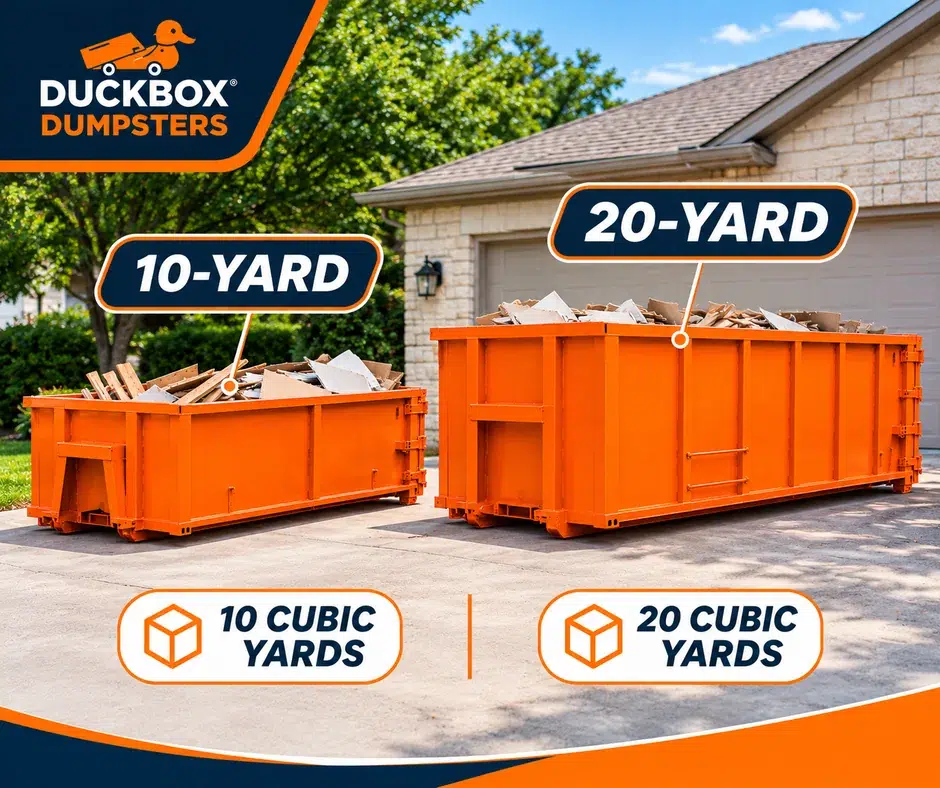
A 10-yard is the pick for under five pickup loads of mostly light debris. A 20-yard is the pick for gut jobs, multi-room cleanouts, or any time you’re unsure. The table lays out the differences. Dimensions and pricing vary by provider, so confirm each container’s measurements and placement requirements before you book.
Side-by-side comparison
| Criteria | 10-yard | 20-yard |
| Capacity | 10 cubic yards | 20 cubic yards |
| Best-fit projects | Bathroom remodel, garage cleanout, flooring from a few rooms | Whole-room gut jobs, multi-room cleanouts, larger renovations |
| Footprint and placement | Smaller and easier to place | Larger capacity, so confirm its dimensions and the room you have |
| Weight concerns | Heavy debris can hit the limit before it’s full | Heavy debris still needs a weight check |
| Cost | Typically the lower price | Typically higher; compare itemized quotes for both sizes |
The simple decision rule
Under three pickup loads of household or light debris, go with the 10-yard. For whole-room gut jobs, multi-room cleanouts, or an honest “I’m not sure,” go with the 20-yard. Combining a bathroom remodel with a garage cleanout? A 20-yard is the safest choice.
Heavy materials are a separate question because weight, not volume, usually sets the limit. Ask about dedicated heavy-material containers and weight limits regardless of size.
What going too small really costs
Going too small may mean a second haul, a second delivery, lost time, and a half-finished project sitting in your driveway, and each of those can add cost.
We give free quotes. Tell us about your project and ask for a quote before you book.
What affects 10-yard dumpster rental cost?
Price depends on where you are, what you’re throwing out, and how long you keep the container. A 10-yard dumpster typically costs about $349 to $1,307 nationally, with an average near $586. Treat that as context, not a promise. Your market sets the real number, so ask for an itemized quote for your address.
The main price drivers
Location comes first: landfill fees, fuel, and delivery distance all shift the price. Debris type and weight come next, since household junk generally costs less than heavy material. Rental period, delivery access, and permits round it out. A permit may be required if the dumpster sits on a public street or other right-of-way.
Narrow driveways, limited parking, and tight alleys can raise delivery costs. Mention your access when you book.
Weight limits and overage fees
According to Dumpsters.com, a 10-yard typically includes 1 to 1.5 tons of disposal weight, with 2 tons common. Overage is billed per additional ton. The Green Dumpster’s weight guide puts typical overage fees at $50 to $100 per additional ton in many markets. Some companies bill a full ton even for a small overage.
Ask these three questions before you sign:
- How much weight is included?
- What is the overage rate per ton?
- Is overage prorated or billed by the full ton?
Rental period and how to avoid surprise charges
Most base rates cover a set number of days, and extensions often add a daily fee. We offer flexible 3-day and 7-day rental periods so you can work at your own pace, and we schedule delivery around your timeline.
With any company, ask for an all-in quote covering the rental period, included weight, delivery and pickup, disposal, extensions, and prohibited items. Weighing a dumpster against a junk removal service? Compare itemized quotes for both, since with a dumpster you do the loading yourself.
Where should it go, and what should you check before you load it?
Put it on a flat, firm, clear surface, usually your driveway, and know what’s banned before you load. A few minutes of checking up front can save real headaches.
Picking the right spot
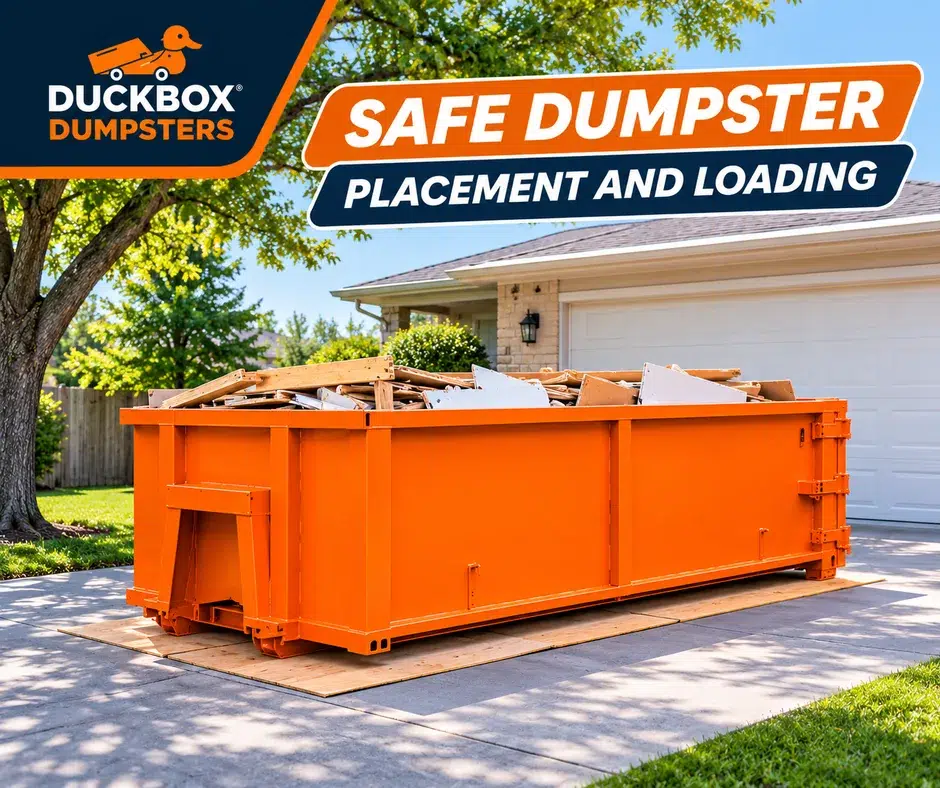
Check for overhead clearance, since trees and wires block the drop-off. Leave a straight path for the truck to deliver and haul away. Put plywood under the container to protect your driveway.
If the container goes on a public street, you may need a permit. Check HOA and city rules first.
What can’t go in the dumpster
Some items are restricted by law, and others are restricted by the hauler or the disposal facility. Rules vary by provider, so confirm before loading.
- Hazardous, toxic, or flammable waste, and liquids like gasoline, motor oil, and wet paint
- Batteries, propane tanks, and other pressurized containers
- Electronics such as TVs, computers, and printers
- Refrigerators, freezers, and air conditioners containing refrigerant
- Asbestos and contaminated soil
Appliances, mattresses, shingles, and tires may be accepted only with prior approval or an added fee, depending on the hauler and the disposal facility. Ask before you load them.
Loading it right
Keep debris level with the top edge. Overfilling is unsafe to haul and can trigger extra charges. Load heavy items first and spread the weight evenly.
Not sure about an item? Our support team is available seven days a week, so you can get an answer before it becomes a problem.
Conclusion: pick the size that finishes the job
A 10-yard dumpster handles small cleanouts and focused remodels. A 20-yard handles bigger or messier jobs. Heavy debris needs extra thought around weight, whatever the size.
An honest estimate is enough. Look at the pile, count the pickup loads, and pick the size that gets the job done in one go.
Call us or request a free quote from Duckbox Dumpsters. We serve Austin, Cedar Park, Leander, and Round Rock, with support seven days a week. Tell us what you’re clearing out and ask for a quote.
Frequently Asked Questions
Can I use a 10-yard dumpster for concrete or shingles?
You can use a 10-yard dumpster for heavy debris, but check the weight limit and whether the materials are accepted before loading. Concrete and shingles can reach the weight limit before the container looks full, so ask about dedicated heavy-material containers.
What should I ask about before booking a dumpster?
You should ask for an all-in quote covering the rental period, included weight, delivery and pickup, disposal, extensions, and prohibited items. Also confirm the overage rate and whether extra weight is prorated or billed by the full ton.
Do I need a permit for a dumpster?
You may need a permit if your dumpster sits on a public street or other right-of-way. Check city and HOA rules before choosing a spot.
How long can I keep a dumpster?
We offer flexible 3-day and 7-day rental periods. Ask about the rental period and extension fees when you request a quote.